
Denver Data Design homeDenver Data Design home

Advancing analytics with AI

AI is a probabilistic system. The same prompt can flip between answers, and agents guess under mathematical uncertainty. Models favor the likely answer, while new ideas come from the improbable.

Methods for AI application in analytics

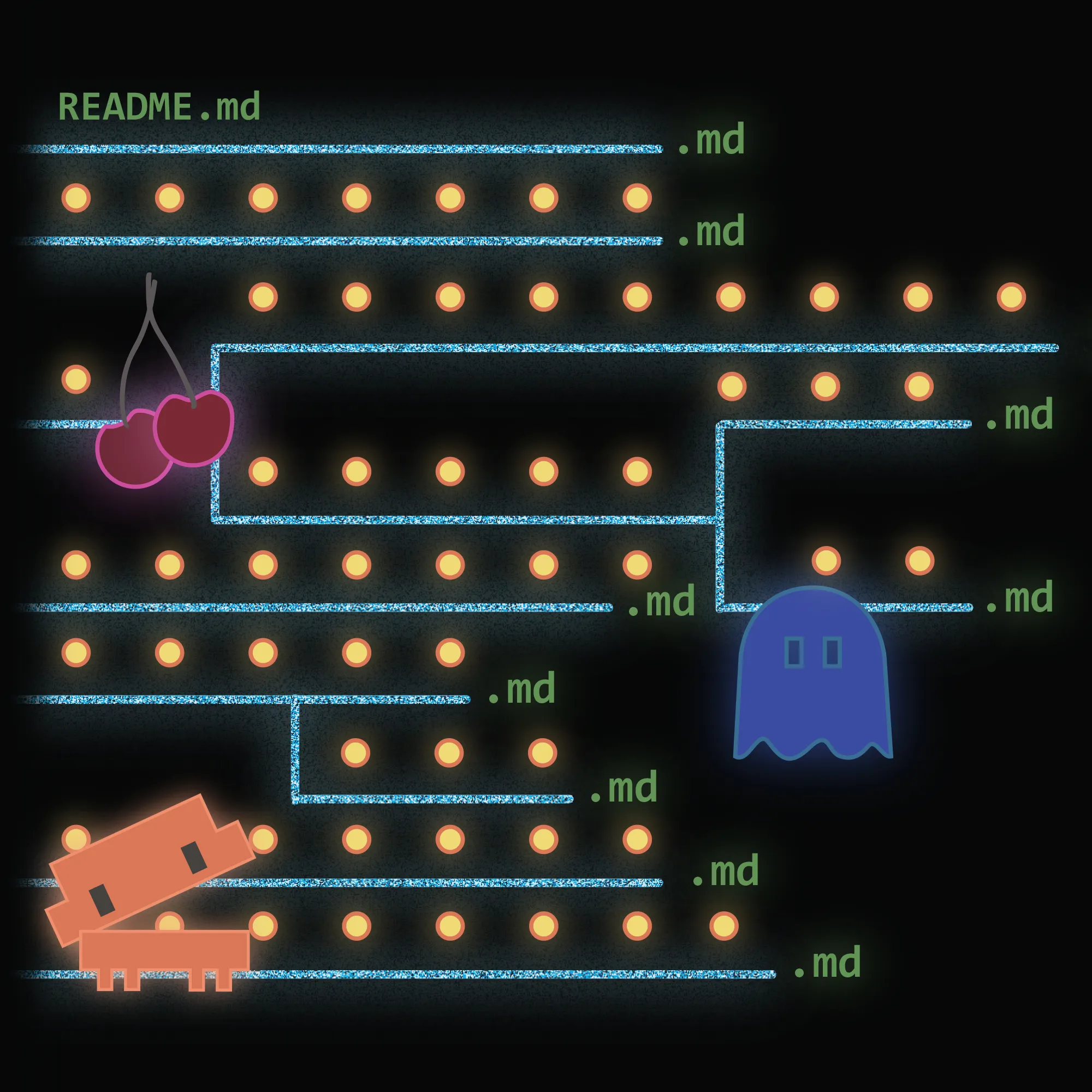
Pac-Man maze of Markdown files: an orange chomper eats dots between walls labeled .md, past cherries and a blue ghost

Agentic architecture for analytics teams

Working with Claude Code reminds me of Pac-Man: the agent chomps through trails of Markdown files, eating context as it goes. Markdown was the language of my statistics homework. Now it’s the information infrastructure of agentic analytics.

Generating files is cheap, but every unreviewed file adds another turn to the maze. Without structure, agents get lost in a probabilistic array of instructions. Two analysts following their own context files get answers that are confidently inconsistent.

I implement runbooks and Markdown architecture for my analytics team. A root CLAUDE.md maps the knowledge tree: team context, business and metric definitions, and database and development best practices. Shared context keeps the team converging on the same facts. I review and simplify every file, which maintains human voice and prevents drift.
Collage of a pointing hand, a speech bubble, and the OpenAI logo

AI executive communication and coaching

I use Claude as a constant feedback loop. For executive updates, I turn my analysis into a summary with succinct insights at the top and supporting details below. Before difficult conversations, I rehearse scenarios and test different approaches. For strategic planning, I test my assumptions and ask for the risks and counterarguments I haven’t considered. I get feedback on demand instead of waiting weeks for the next 1:1.

To evaluate my impact, I keep a weekly success log, stored alongside a record of my strengths, company goals, and professional aspirations. Weekly bullets roll up into monthly reflections, then into mid-year and annual review summaries: the same grain changes I’d design in a data warehouse. Each week, an agent reviews the log and helps me refine the entries. The review reminds me to capture concrete numbers and flags when I diverge from my stated goals.

Decision boundary plot comparing classifiers, data points over red and blue regions

AI exploratory data analysis

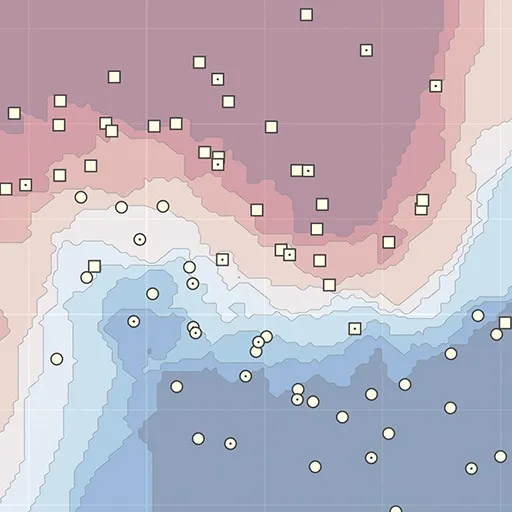
When I analyze billions of silicon design records, an AI agent parses the report files and counts each instance of a pattern I name. I write SQL-like prompts to chart the suspected issue fast, then iterate on the investigation with a team of agents.

I’ve had massive efficiency gains using AI to speed up exploratory data analysis: it’s like a complex find-and-replace for code. Instead of writing visualization scripts from scratch, I prompt AI to generate R and Python code that reveals data patterns instantly. For data cleaning, I rapidly create visuals to spot outliers, understand their impact, and prompt solutions. In Excel, Claude writes complex transformation formulas without the usual battle with parentheses and commas.

Chalkboard covered in math and physics equations

AI-powered learning

When I began at AMD, silicon design was a new industry. To learn what the engineers using our data applications needed, I bought a Xilinx PYNQ-Z1 FPGA SoC development board. An FPGA (field-programmable gate array) is a chip you rewire with code, and the SoC (system on chip) version pairs it with a processor. My electrical engineer brother helped me design projects to develop hands-on experience with chip development, and AI was a tireless resource for my endless questions.

While completing advanced mathematics and statistics coursework, I’ve used AI as an on-demand tutor. When I get the right answer but don’t understand why an alternative approach failed, I ask for clarification. When stuck, I describe my attempted approach and ask about the underlying principles. This builds understanding instead of collecting answers. I’ve learned more from explaining my confusion to an AI than from passively reading solutions.

Microsoft Word icon beside a document with the OpenAI logo

AI-accelerated technical writing

I use AI for iterative editing, not writing. I draft the outline and content first, then edit one paragraph at a time with a focused prompt, such as “edit for clarity”. I take elements from the output instead of pasting the entire text. Short, precise prompts keep token use low and limit AI bloat.

I keep communication rules in a CLAUDE.md file: target audience, direct communication, no idioms, no “so”, no em dashes. Agents quickly reach for these easily ingestible bites and mostly follow my instructions. On this site, a prose lint script also blocks weak words and sentences over 25 words. Weak words are the softening phrases Tara Mohr names in Playing Big, like “just” and “actually”. The agent edits against those rules, and the lint catches what slips through.